Sports
Which Sports are the Best to Capture Using a FPV Drone?
Discover the best sports to capture using FPV drones. From high-speed motorsports to surfing and flow arts, learn how FPV creates a visceral experience that traditional cameras can
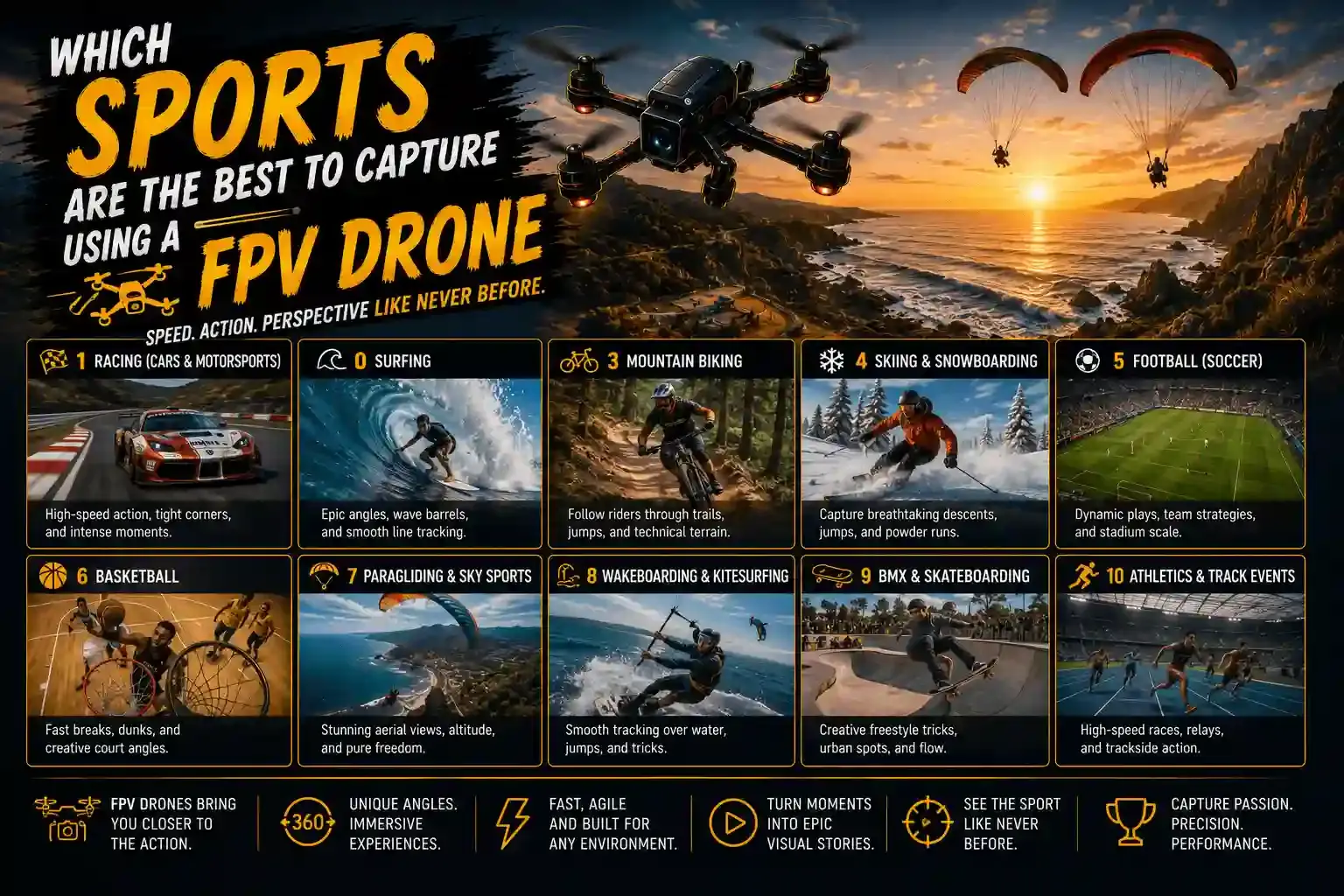
In the world of sports media, the transition from a "viewing" experience to an "immersion" experience is happening right now. Traditional cameras on tripods or standard GPS drones provide a safe, detached perspective. But FPV (First Person View) drones place the viewer right in the slipstream of the athlete.
As a pilot, I look for sports that involve Dynamic Planes of Movement—sports that bank, dive, and accelerate. Here is a technical breakdown of which sports are transformed the most by FPV technology.
1. Motorsports: Drifting and Formula Racing
Motorsports are the spiritual home of FPV drone videography. Because FPV drones can reach speeds of over 100mph and accelerate instantly, they are the only tools capable of Synchronized Proximity Tracking.
- The Visual: We can fly the drone within inches of a drift car's rear bumper as it rounds a corner, capturing the smoke, the engine vibrations, and the driver's intent.
- The Agility: Standard drones cannot handle the sudden changes in inertia found in racing. FPV drones mimic the car’s banking, making the footage feel like a high-budget video game.
2. Water Sports: Surfing and Kite-Surfing in Goa
Capturing surfing with a long lens from the shore is common, but capturing it from an FPV drone is revolutionary. In the Goa coastline context, the drone can track a surfer from the moment they paddle into a wave until they kick out.
By flying at a Low-Altitude Water Plane (just 1-2 feet above the surface), we capture the surface tension of the water and the spray of the board in 4K high-bitrate detail. The drone’s ability to "duck" under the lip of a wave or follow a kite-surfer through a jump adds a vertical dimension that traditional media teams simply cannot achieve.
3. Extreme Sports: Mountain Biking & BMX
Mountain biking (MTB) is defined by its environment—tight forests, steep drops, and massive gaps. A standard camera setup requires dozens of stationary cameras to capture a run. A single Cinewhoop FPV drone can follow the rider through the entire descent.
We utilize the "Follow-Cam" style, weaving through trees and diving off cliffs alongside the athlete. This proximity builds a 1:1 emotional connection between the rider's skill and the viewer's eye, making the final edit feel like a blockbuster action sequence.
4. Gear Selection: Choosing the Right "Bird"
Not all FPV drones are created equal. For a sports media director, choosing the right technical asset is key:
- 5-Inch Racing Quads: Used for motorsports and high-speed chase sequences where 100mph+ speeds are required.
- 3-Inch Cinewhoops: Used for proximity tracking of athletes, flow artists, or indoor stadium events where propeller guards are a safety necessity.
- Long-Range Builds: Used for downhill mountain biking or coastal tracking where signal penetration and flight time are priorities.
Sports Performance: FPV vs. Traditional Media
To understand the marketing ROI of sports drone videography, compare the technical capabilities:
| Sport Category | Traditional Tracking | FPV Drone Advantage |
|---|---|---|
| Motorsports | Sideline Zoom | Proximity Chase (Synced Flow) |
| Water Sports | Shoreline/Jet Ski | Low-Altitude Surface Tension |
| Athletics | Cable Cam | Full 3D Freedom of Movement |
| Extreme Sports | Stationary Points | Continuous Action Narrative |
Frequently asked questions
- Which sports benefit most from FPV drones?
- High-speed and high-proximity sports like Motorsports (Drifting/F1), Water Sports (Surfing), and Extreme Sports (MTB) benefit most due to the drone's ability to match the subject's agility.
- Is it safe to use FPV drones near athletes?
- Yes, for close-proximity tracking like flow artists or football, we use 'Cinewhoop' drones with propeller guards to ensure athlete safety.