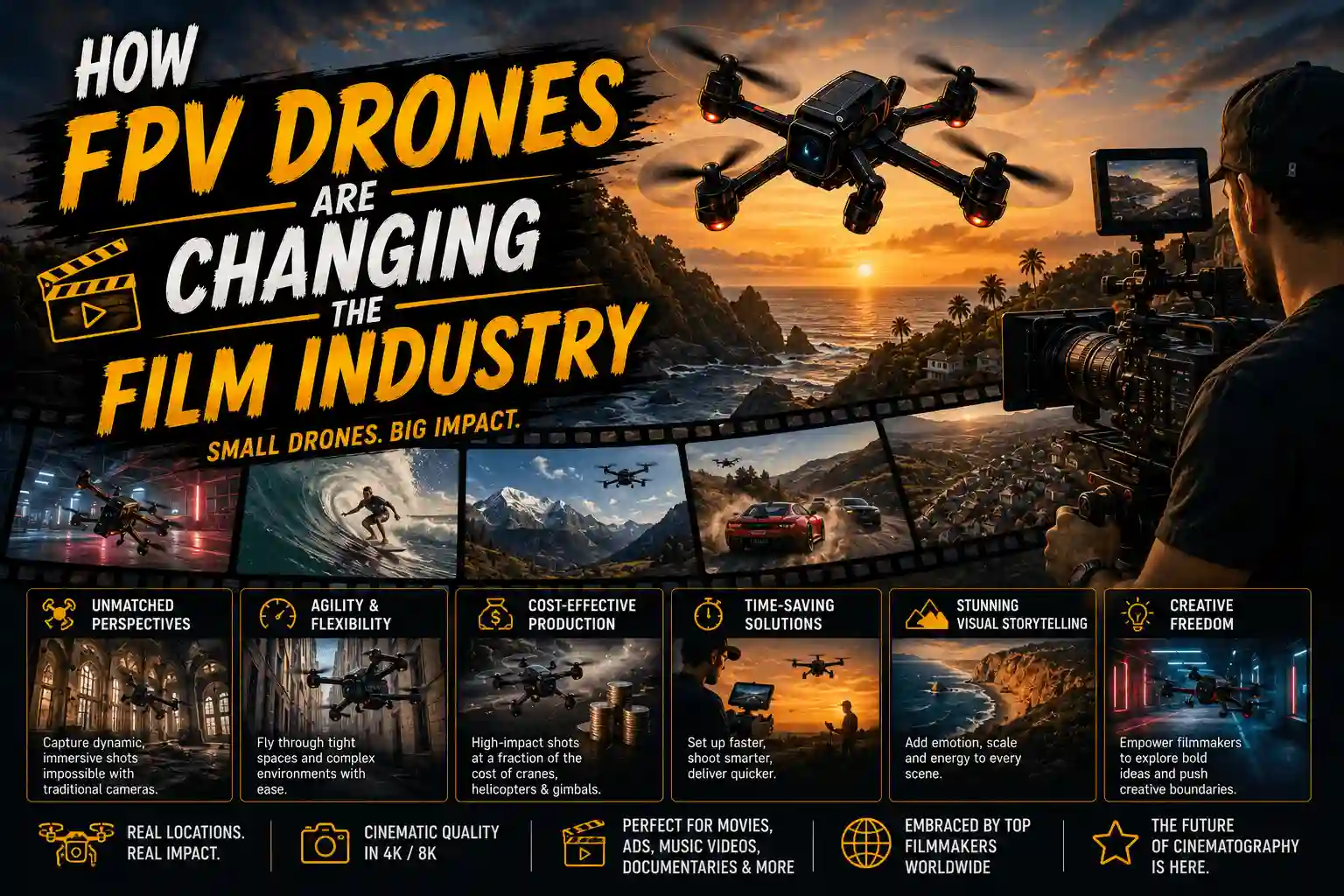
How FPV Drones are Changing the Film Industry
Filmmaking has always been about the pursuit of the "impossible shot." From the invention of the Steadicam to the first helicopter aerials, directors have constantly pushed for more dynamic movement. Today, FPV (First Person View) drone videography is the single most disruptive technology in the industry, allowing creators to move a camera in ways that were previously limited to CGI.
1. The Rise of the 'One-Shot' Wonder
One of the most profound changes is the ability to capture complex Single-Take Sequences. In the past, showing a character walking into a building, through a hallway, and out onto a balcony required multiple cuts or incredibly expensive crane setups.
FPV drones can start a mile away from a location, dive through a 2-foot wide window, follow an actor through an interior space, and exit through another opening—all in one continuous, high-bitrate take. This creates a level of immersion that keeps the audience locked into the narrative without the distraction of a cut.
2. Impossible Tracking and Extreme Proximity
Standard drones are limited by safety sensors that prevent them from getting close to objects. FPV drones are flown manually, allowing a skilled pilot to fly within inches of the action.
- High-Speed Tracking: Whether it's a car chase or a high-energy dance performance, FPV drones can match the speed and bank of the subject.
- Proximity Aerobatics: We can fly under moving vehicles, through scaffolding, or between actor's arms to provide a perspective that feels personal and high-octane.
- Cinematic Flow: The ability to bank and roll the drone mimics the movement of a bird or a fighter jet, adding a "visceral" feel to the frame.
3. Replacing Massive On-Set Rigs
The ROI of drone videography in filmmaker's kits isn't just about the visual—it's about the logistics. A single FPV drone team can often replace the functionality of three separate rigs:
- The Technocrane: For sweeping vertical and horizontal movements.
- The Dolly/Slider: For smooth tracking shots across uneven terrain.
- The Jib: For over-the-shoulder and reveal shots.
By reducing the amount of heavy hardware on set, production companies in Goa can shoot faster and in more remote locations where traditional rigs simply cannot be transported.
4. FPV in the Goa Media Market
In Goa, FPV is being used heavily in Luxury Hospitality and Fashion films. High-end resorts in North Goa are moving away from flat aerial photos and adopting "Micheal Bay style" FPV fly-throughs to showcase the scale and vibe of their properties. It allows brands to tell a story that feels modern, fast-paced, and elite.
Technical Efficiency: FPV vs. Traditional Rigs
To understand the impact on production budgets and timelines, look at the data:
| Production Metric | Standard Cinema Rig | FPV Drone Cinema |
|---|---|---|
| Setup Time | 2-4 Hours | 15-20 Minutes |
| Max Altitude | ~30 Feet (Crane) | 400 Feet (Legal Limit) |
| Indoor Capability | Limited (Track/Rail) | High (Cinewhoop) |
| Crew Required | 4-6 Specialists | 1 Pilot + 1 Spotter |
Directing a project in Goa? Let's capture the impossible.
Book a Cinematic Drone SessionFrequently Asked Questions for Filmmakers
-
What cameras do you carry on your FPV drones?
For high-end cinema, we carry a full-size GoPro Hero 12 for 10-bit color or specialized "naked" cinema cameras that allow for 5.3K resolution with 120fps capability. -
How do you stabilize FPV footage for the "smooth" look?
We utilize gyro-data logging during flight and process it in post-production using ReelSteady or Gyroflow to ensure the result is buttery smooth while maintaining the FPV "lean." -
Can FPV drones record audio?
Generally, no. The prop-wash and motor noise are too loud. Professional productions use external field recorders or foley to sync the audio with the aerial visuals.