How Architects are Using FPV Drones in Goa
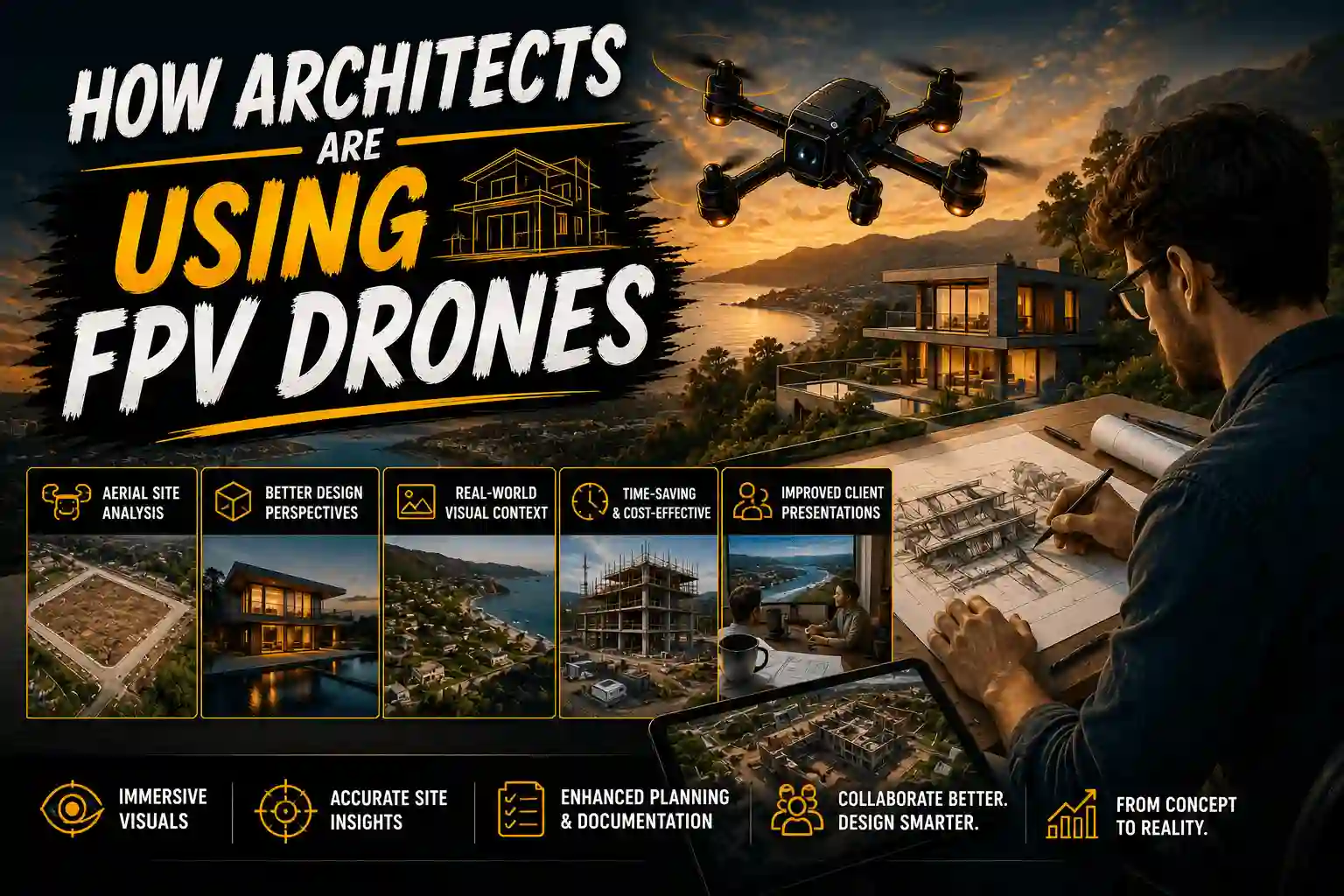
Architecture is the art of space and flow. Traditional architectural photography—while beautiful—is inherently static. For a modern architect in Goa, showcasing a finished project is no longer just about the pixels; it's about the path. FPV (First Person View) drone videography has become the essential tool for design firms to communicate their vision to high-end clients.
1. Showcasing an Award-Winning Portfolio
An architect's portfolio is their strongest currency. To win international contracts or luxury villa projects in Assagao, you need content that stands out. FPV drones allow architects to:
- Capture the "One-Shot" Narrative: Create a continuous fly-through that starts at the property gates, glides over the pool, and enters the living room through a narrow balcony, showing the literal "flow" of the home.
- Demonstrate Materiality: Fly within inches of textured masonry or polished wood to show the quality of craftsmanship that defines your brand.
- Contextualize the Environment: Show how the building sits within the tropical Goan canopy, emphasizing the relationship between the structure and nature.
2. Viewing Construction from Impossible Angles
One of the most critical aspects of architectural design in Goa is the orientation of the structure. FPV drones provide a technical advantage during the design phase that standard photography cannot.
By flying at the exact height and coordinate of a future second-floor window, architects can visualize the "Real-View" before a single brick is laid. This helps in analyzing sunlight paths, wind flow, and privacy from neighboring structures. Being able to "look at the angles" in real-time allows for rapid design iterations that save thousands in construction adjustments later.
3. Better Design Through Proximity Flying
Good design solves problems. FPV drones help architects "better design constructions" by providing a 1:1 human-eye perspective at any altitude.
Traditional drones stay far away from structures due to safety sensors. FPV drones, however, can fly through narrow heritage archways and under cantilevered roofs. This proximity allows architects to inspect the visual balance of a design from the perspective of someone actually living in the space. It moves architecture from a 2D blueprint into a 3D living experience.
4. The Edge in Luxury Hospitality
In Goa’s competitive resort and villa market, architects are using FPV to help developers sell the "experience." When a potential investor can see a seamless cinematic flight through a designed space, the ROI is communicated instantly. It proves that the architect hasn't just designed a building, but has designed a lifestyle narrative.
Capabilities: FPV vs. Traditional Media
For design firms looking to upgrade their marketing and technical workflow, the choice is clear:
| Feature | Standard Photography | FPV Drone Media |
|---|---|---|
| Spatial Flow | None (Static) | High (Continuous Path) |
| Angle Analysis | Ground Level Only | 360° Aerial Proximity | Moderate | Extremely High |
| Site Context | Wide Scans | Immersive Interaction |
Are you an architect looking to showcase your latest masterpiece?
Get an Architectural Flight QuoteFrequently Asked Questions
-
Is FPV drone flying safe for finished interiors?
Yes. We use Cinewhoop drones with padded propeller guards, specifically designed for high-end interior walkthroughs without risking any damage to finishes or decor. -
Can you fly in tight spaces like heritage villa staircases?
Absolutely. Specialized FPV pilots can navigate spaces as narrow as 2 feet, allowing for cinematic shots through even the most complex architectural features. -
How does drone footage integrate with BIM?
The 4K high-bitrate footage we provide can be used by architects to verify that the physical construction perfectly matches the digital BIM model.